Tuesday, October 18, 2011

squirrel


Posted by Picasa

Behavior


Several species of squirrels have melanisticphases. In large parts of United States and Canada, the most common variety seen in urban areas is the melanistic form of the Eastern Gray Squirrel.

Squirrel eating a peanut
Squirrels breed once or twice a year, and give birth to a varying number of young after three to six weeks, depending on species. The young are born naked, toothless, and blind. In most species of squirrel, only the female looks after the young, which are weaned at around six to ten weeks of age and become sexually mature at the end of their first year. Ground dwelling species are generally social animals, often living in well-developed colonies, but the tree-dwelling species are more solitary.[5]
Ground and tree squirrels are typically diurnal, while flying squirrels tend to be nocturnal—except for lactating flying squirrels and their offspring which have a period of diurnality during the summer.[8]

VAANI


Posted by Picasa

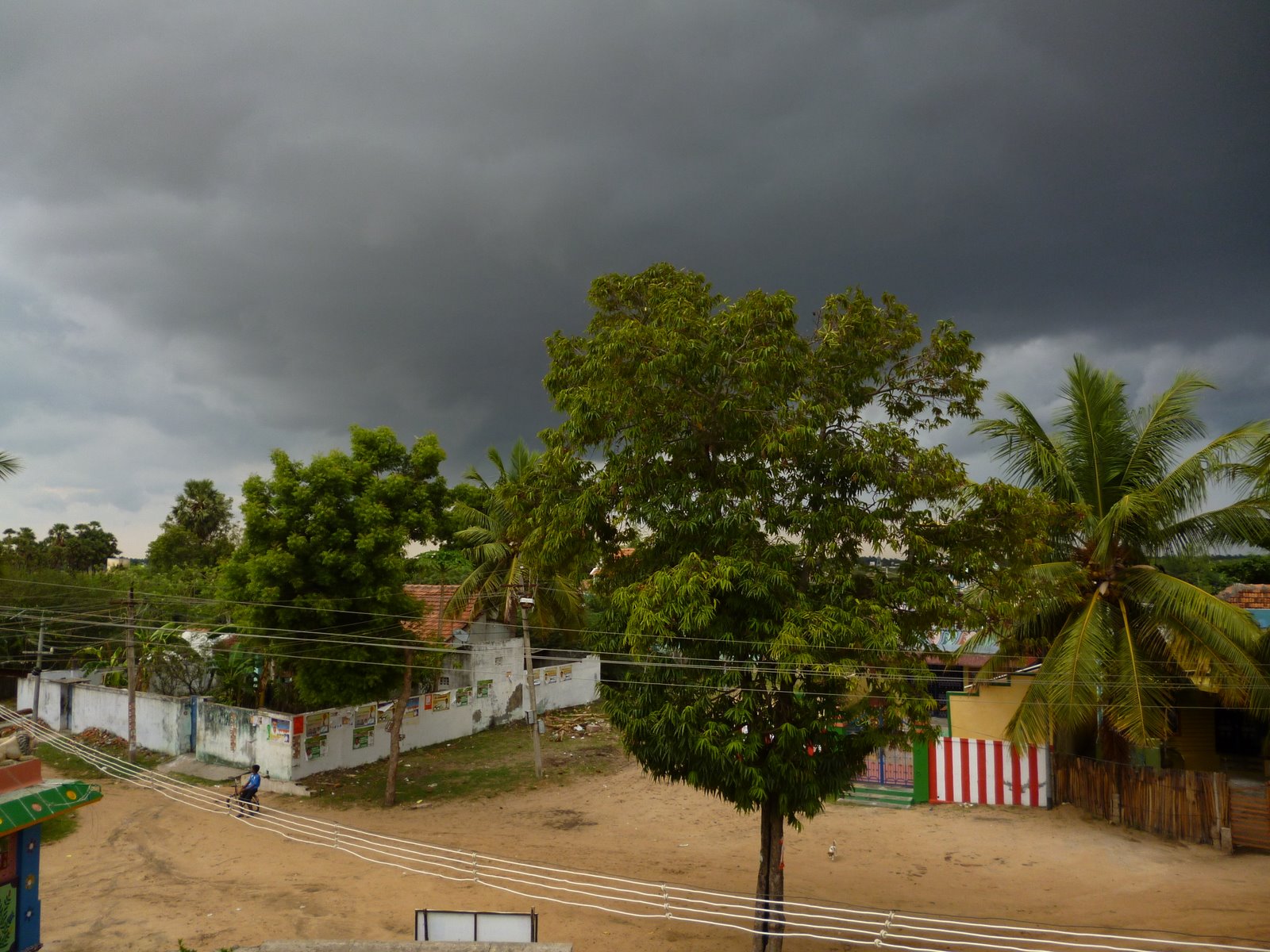
Traditional villages


Although many patterns of village life have existed, the typical village was small, consisting of perhaps 5 to 30 families. Homes were situated together for sociability and defence, and land surrounding the living quarters was farmed. Traditional fishing villages were based on artisan fishing and located adjacent to fishing grounds.

Monday, October 17, 2011

Pamban Bridge


The Pamban Bridge or Indira Bridge (Annai Indira Sethu) named after the ex- Indian Prime Minister Mrs. Indira Gandhi, is on the Palk Strait & connects Pamban in the island Rameswaram to Mandapam in mainland India. It is a twin bridge system, one (the much older one) is a railway bridge & the newer one is a road bridge constructed in 1988 at a higher level than the older one.The name refers to both the road bridge and the railway bridge, though originally the name Pamban bridge was used to mean the latter. It was India's first sea bridge. It is the second longest sea bridge in India (after Bandra-Worli Sea Link) & is about  2.3 km long. The railway bridge  was opened for traffic in 1914. The railroad bridge has a still-functioning double-leaf bascule bridge section that can be raised to let ships pass under the bridge.
The railway bridge historically carried meter-gauge trains on it, but Indian Railways upgraded the bridge to carry broad-gauge trains since 2007. Many ships — cargo carriers, coast guard ships, fishing vessels and oil tankers — pass through the bridge regularly.
The scene of a long train crosssing the sea on this guard-less bridge is really awesome.


Dhanushkoti


Posted by PicasaDhanush Koti 

(meaning - The Bow's End) is a tiny hamlet

in Rameshwaram on the South Indian East Coast.
Destroyed almost completely by nature's fury more than 50 years ago , this place is a grim reminder of what mother nature can do on her day. This discussion will be about
rehabilitation of people victimised by nature's fury
throughout the world, and to invite people to visit
Dhanushkoti and witness an eerie calmness that prevails.

Anyone who wants to participate in an invigorating
discussion about natural disasters and their aftermath
are welcome.